

Skip to content
View in the app

A better way to browse. Learn more.

MagicDuel Community

A full-screen app on your home screen with push notifications, badges and more.

To install this app on iOS and iPadOS
  1. Tap the Share icon in Safari
  2. Scroll the menu and tap Add to Home Screen.
  3. Tap Add in the top-right corner.
To install this app on Android
  1. Tap the 3-dot menu (⋮) in the top-right corner of the browser.
  2. Tap Add to Home screen or Install app.
  3. Confirm by tapping Install.

Images

Seigheart

Member
  • Joined

  • Last visited

Everything posted by Seigheart

  1. I see now that its because Q Docs don't exist anymore... O.o
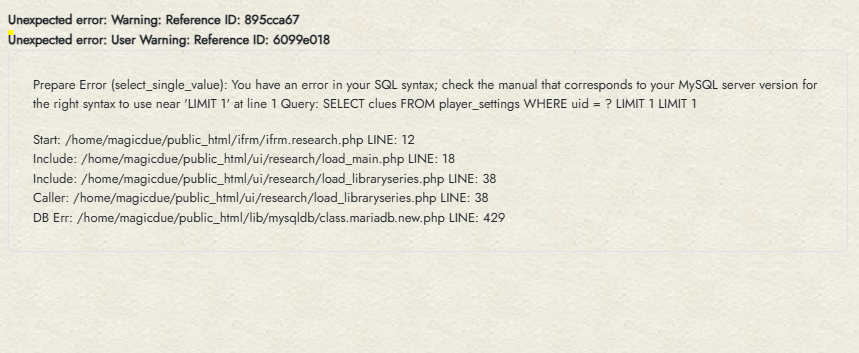
  2. When attempting to upload to my Q Doc, I got this error.
  3. Quest: The Crafters' TrialThe Crafters Guild was built around creation, so this quest will require you to do exactly that. Your task is simple: Create something using materials you can actually find within the realm, then use the Forge to bring that creation into existence. The TaskChoose a craft that you believe belongs within the Crafters Guild. Blacksmithing, masonry, carpentry, alchemy, tailoring, leatherworking, cooking, engineering, or something entirely different are all acceptable. Then go into the realm and gather the materials necessary for your creation. Rules1. Materials Must Come From the RealmYou must physically gather, trade for, or otherwise legitimately obtain the materials you intend to use from within MagicDuel. Do not simply list hypothetical ingredients. 2. Create Something With PurposeDecide what your materials will become and why. Your creation should make reasonable use of the materials you gathered and should have an identifiable purpose. 3. Use the ForgeOnce your proposal has been accepted and your materials gathered, you must use the Forge to attempt to create the item. The Forge may interpret your offering differently than you expect. That is part of the quest. 4. Explain Your CraftYour submission should explain: The Craft: What trade or combination of trades does your creation represent? The Materials: What did you gather? The Creation: What are you attempting to create? The Method: Why should these materials become this particular creation? The Purpose: What is the finished item intended to do? The Result: What did the Forge actually produce? 5. Approval Before ForgingPresent your proposed creation and materials to me before committing them to the Forge. I reserve the right to decline any proposal at my discretion. This is primarily to keep submissions within the spirit of the quest, prevent exploitation, and ensure that any credits I provide are being used for genuine participation. If your proposal is declined, you are welcome to submit another. If you are unsure whether something is allowed: Ask before doing it. JudgingEntries will be judged based on: Creativity : Use of Materials : MD Logic : Craftsmanship : Purpose : Forge Result An unexpected Forge result will not automatically count against you. Sometimes failure teaches more about crafting than success. I am interested in what you attempted, why you attempted it, what you sacrificed to make it happen, and what the Forge decided those things meant. Reward1st Place: 1 Wish Point + 15 Essential Oils + 15 Flasks of Toxic Extracts 2nd Place: 10 Essential Oils + 10 Flasks of Toxic Extracts 3rd Place: Random Resource Bundle The ChallengeDo not start with an imaginary item and conveniently invent the ingredients afterward. Look at what the realm actually provides. Gather those things. Consider what they are. Consider what they mean. Decide what they could become. Then put that belief to the test. A good crafter does not merely have ideas: a good crafter understands their materials. Show me what the realm gives you. Show me what you believe it can become. Then prove it at the Forge. One Guild. All Crafts. All Paths.
  4. I think this is a fair assessment, and honestly it touches on a larger issue within MD: alliances should have a purpose beyond simply preserving their name and badge. That said, I would rather see the Caretakers rebuilt than buried. The alliance has history, identity, and a theme that still fits MD extremely well. If death itself no longer provides enough purpose, perhaps this is an opportunity to redefine what a Caretaker actually cares for. Death, the dead, forgotten places, abandoned mechanics, the East, old rituals, or even maintaining knowledge and traditions that would otherwise disappear could all fit naturally within its identity. MD has changed considerably, and some of its alliances probably need to change with it. I am facing a similar question with the Crafters Guild: preserving an alliance for nostalgia alone accomplishes very little, but taking something old and giving it a reason to exist again can add something valuable to the realm. So I would vote against simply disbanding the Caretakers. If Ledah no longer wishes to carry it, find someone willing to give it a new purpose, give them the freedom to reshape it, and see what grows from there. Old things in MD don't necessarily need to die. Sometimes they just need a new role.
  5. Seigheart's Guide to Beginner's CombatMagicDuel combat can look like a simple creature-vs-creature system at first, but underneath it is a fairly complicated interaction between rituals, creature abilities, targeting types, VE, principles, creature stats, and combat balance. The biggest mistake is thinking: "My creatures are stronger, therefore I should win." MD combat doesn't really work that way. A weaker collection arranged into the right ritual can defeat creatures that are considerably stronger on paper. This is an attempt to explain the basic system, the different attack types, and how some common creatures fit into it. I am by no means the best person to write this, so please feel free to correct me if I am wrong. The purpose is purely to help new players with basic fundamentals. 1. Rituals Are the FoundationYou don't command creatures individually during combat. Instead, you create a ritual beforehand. A ritual determines: Which creatures participate How much VE is committed Which principles are assigned Which abilities are brought into the fight How those abilities interact with each other Once combat begins, the engine resolves those instructions. So most MD combat strategy happens before you click attack. 2. Understanding Attack and Targeting TypesOne of the most important things to understand is that "attack" doesn't always mean the same thing. Creature abilities have different targeting behaviours, and knowing what they actually target is essential when building rituals. RandomRandom chooses a target randomly from the available valid targets. This is unpredictable, but that doesn't necessarily make it bad. If the opponent has six creatures, however, your damage may be spread across several targets instead of concentrating on the creature you actually need dead. Example: You deal 1,000 damage four times. Random targeting might produce: Creature A : 1,000 Creature B : 2,000 Creature C : 1,000 Instead of killing one creature with 4,000 concentrated damage, you've wounded three. WeakWeak targeting attempts to attack the weakest available target. This is useful for finishing creatures off. Imagine the opponent has: Creature A : 12,000 VE Creature B : 8,000 VE Creature C : 600 VE A weak-targeting attacker can remove Creature C instead of wasting its attack against the healthier creatures. This can be extremely useful for systematically dismantling a ritual. StrongStrong targeting focuses on stronger targets. Instead of wasting attacks against disposable creatures, it can direct pressure toward the opponent's more significant creatures. This can be valuable when the enemy has one creature doing most of the work. DyingDying targeting is designed around creatures already close to death. Think of it as an execution mechanic. Rather than distributing damage around the battlefield, it helps finish creatures that have already been heavily damaged. This can combine particularly well with another creature that spreads damage first. MultipleMultiple targeting affects several creatures rather than concentrating entirely on one. This is excellent for spreading damage across a ritual. The trade-off is concentration. If you have enough power, multiple targeting can devastate an entire ritual. If you don't, you can end up with six injured creatures that are all still alive and functioning. AllSome abilities affect all valid targets. These become particularly interesting when combined with abilities or creatures that benefit from battlefield-wide effects. An "all" ability doesn't necessarily mean "massive damage." Its strength is that nothing can hide behind target selection. Ally / Friendly TargetingNot every combat ability attacks the opponent. Some abilities target your own creatures. These can: Heal Protect Strengthen Support Modify stats This is where ritual construction starts becoming much more interesting. A creature may contribute almost no direct damage and still be the reason the ritual wins. 3. Attack Types Aren't Just About DamageThere are also important differences in what an ability actually does. Direct DamageThe simplest form. Creature attacks target → target loses VE. But even here, targeting matters enormously. High damage with poor targeting can be less useful than moderate damage that consistently hits exactly what you need. HealingHealing abilities restore your creatures rather than damaging the opponent. A healing creature therefore changes the mathematics of the entire fight. Suppose an enemy deals: 5,000 damage per round but your ritual restores: 3,000 VE per round. Their effective progress is now much smaller. Combine healing with durable creatures and battles can become very difficult for an opponent to finish. Defend / ProtectDefensive abilities exist to keep other parts of the ritual alive. This introduces the idea of roles. A creature doesn't have to kill anything to be valuable. Its entire purpose might be keeping your important attacker alive long enough to act. WeakenWeakening attacks reduce the effectiveness of enemy creatures rather than simply trying to kill them immediately. This can be extremely powerful. Instead of asking: "How quickly can I kill that creature?" you're asking: "How quickly can I make that creature irrelevant?" Sometimes disabling the enemy's damage output is easier than overpowering its VE. Boost / SupportSome abilities increase the effectiveness of your own creatures. This is where combinations become important. A mediocre attacker by itself may become dangerous when another creature is amplifying the stat its ability uses. This is why reading creature abilities individually isn't enough. You have to ask what the entire ritual is doing. 4. Common Creatures and What They Teach YouSome of the creatures players encounter are particularly useful for learning combat mechanics. AramorThe Aramor is one of the creatures most players become familiar with early. It's useful for learning the fundamentals: Attack Defence VE Target selection Creature upgrading An Aramor may eventually seem simple compared with more exotic creatures, but that's exactly why it's useful for learning. Think of it as one of MD's basic combat building blocks. GrasanThe Grasan introduces players to the idea that creatures can occupy very different roles and that raw appearances or creature level don't tell the entire story. Different upgrades and uses make Grasans useful for experimenting with ritual composition rather than simply stacking attackers. ElementalElementals are another important family because they begin exposing players to more specialized abilities and combinations. They help demonstrate why you should read exactly what an ability uses and targets rather than simply looking at the creature's attack statistic. Water DaimonThe Water Daimon is a good example of why support abilities matter. Healing changes the fight without directly damaging anything. Imagine: Aramor: attacks Aramor: attacks Water Daimon: heals The Daimon isn't necessarily there to kill the opponent. It's there to make sure the creatures doing the killing remain alive. That's a fundamentally different role. Heretic ArcherHeretic Archers demonstrate how valuable ranged/specialized offensive behaviour and targeting can become. An attacker that consistently interacts with the targets you actually care about may outperform something with higher theoretical damage. They're useful creatures for learning that: damage × targeting × ritual composition matters more than damage alone. KnatorKnators are another creature where players start thinking more seriously about what role a creature occupies inside a ritual. Rather than asking whether a Knator is simply "better" than another creature, ask: What job am I giving the Knator? That's the better question for almost every MD creature. TreeTrees are an excellent demonstration of support-oriented combat. A Tree isn't something you should evaluate purely by asking: "How much damage does this do?" Its usefulness comes from how it affects the rest of the ritual. A ritual built around attackers and a ritual built around attackers supported by healing can behave completely differently. DrachornDrachorns are among MD's iconic creatures and demonstrate what happens when powerful abilities, strong statistics, principles, and carefully designed rituals begin interacting. But even a powerful Drachorn isn't automatically an "I win" button. If the ritual around it is poorly designed, another player can potentially build specifically around countering what it's doing. AngienAngiens are another good example of advanced combat becoming less about one number and more about interactions. By the time you're seriously experimenting with creatures like Angiens, you should already be thinking about: Ability Targeting VE Principles Initiative Support Enemy composition Ritual purpose rather than simply Attack + Defence. 5. Example: Concentrated DamageSuppose your opponent has: 1 extremely dangerous creature 5 weak support creatures You bring six random-target attackers. Your attacks might get scattered across everything. That dangerous creature remains alive and continues doing its job. A ritual designed to concentrate attacks against the appropriate target can potentially eliminate it much sooner. Same approximate combat power. Different targeting. Completely different result. 6. Example: Spread + ExecuteNow imagine combining two roles. Creature A: damages multiple targets. Creature B: targets dying/weak creatures. Creature A softens the enemy ritual. Creature B begins removing the damaged creatures. Instead of six independent creatures doing unrelated things, you've created a simple combat engine: Spread damage → identify vulnerable targets → eliminate them. That's ritual design. 7. Example: Tank + Heal + DamageAnother basic concept: Creature A: durable Creature B: healer/support Creatures C–F: attackers The attackers provide your offensive pressure. The durable creature helps absorb the battle. The healer keeps your ritual functioning. Suddenly the opponent isn't merely racing your attackers. They're fighting against your ritual's ability to sustain itself. 8. Principles Change the EquationPrinciples aren't merely character flavour. Depending on the creatures and abilities being used, your principles can influence how effective your ritual becomes. That means copying another player's ritual doesn't necessarily reproduce their result. They may have different: Principle values Creature levels Creature age VE Stats Permanent boosts Character development Two visually identical rituals therefore aren't necessarily equivalent. 9. VE Is AmmunitionVital Energy isn't simply a health bar. It's something you're committing to the ritual. More isn't automatically better in every situation. You might intentionally create: Full-power ritual - intended to win. Low-VE ritual - intended to conserve resources. Sacrificial ritual - creatures are expected to fall. Loss ritual - specifically designed to lose. That last category is especially important in MD. 10. Losing Is Part of CombatMagicDuel is unusual because sometimes the correct combat decision is: Lose. You may need losses for combat balance, quests, experimentation, or some other objective. That means "best ritual" doesn't necessarily mean: the ritual that wins most often. It means: the ritual that produces the result you currently need. A ritual designed to lose reliably is still a successful ritual if losing was its purpose. 11. Read Your Combat LogsProbably the single best way to understand MD combat is to actually study the combat results. Don't just look at: VICTORY or DEFEAT. Look at what happened. Which creature acted? What ability did it use? What did it target? How much damage occurred? What changed afterward? Which creature died first? Did your support creature accomplish anything? Then modify one thing and fight again. That's how you start reverse-engineering the system. 12. Think of a Ritual as One CreatureThis is probably the most useful way I've found to think about combat. Don't think: "I have six creatures." Think: "I have one machine with six components." One component finds targets. One spreads damage. One finishes damaged targets. One heals. One protects. One provides the heavy attack. If those six pieces complement each other, the ritual becomes much more than the sum of its creature stats. And that's where MagicDuel combat becomes interesting. Creatures provide the pieces. Abilities give those pieces functions. Targeting tells them where to act. Principles influence their strength. VE fuels the machine. Rituals connect everything together. Knowledge makes it work. I'm sure there are interactions, attack types, creatures, and edge cases I've missed, so corrections and additions from people who have spent far too many years staring at combat logs are welcome. What combat mechanic took you the longest to understand, and what creature taught it to you?
  6. When you click the title of the research library subjects(like Murs Land, or Chronicles of a shade killer), you get broken links. See below:
  7. A Practical Guide to Using the ForgeI've been playing around with the Forge, alot lol, and figured it might be useful to put together a basic guide for anyone trying to understand how to approach it. The biggest thing to understand is that the Forge isn't a normal crafting system. You aren't just putting ingredients into a machine and getting a predetermined result. You're sacrificing items and creatures, giving the Forge an idea of what you're trying to create, and letting it judge what those sacrifices should become. And there's one particularly important detail: The Forge uses your entire character history when judging what you give it. Exactly how much that influences the result, and what parts of your history it considers important, is something we're probably going to have to discover ourselves. Make of that what you will. Start with the purposeBefore throwing anything into the Forge, figure out what you actually want to make. Don't start with: "I have these items. What can I get?" Start with: "I want something that does X. What sacrifices would make sense for creating it?" That difference seems pretty important. Your character is part of the recipeThis is probably one of the stranger parts of the Forge. The ingredients you put into it aren't the only information it has available. Your character's entire history can be part of its decision. That potentially means two players could make very similar sacrifices, ask for very similar things, and still receive different results because the sacrifices don't mean the same thing coming from different characters. Your possessions, creatures, previous actions, wishes, accomplishments, roles, activity and history in the realm may all provide context for what you're asking the Forge to create. So when you're designing something, don't only ask whether the ingredients make sense. Ask whether the creation makes sense for your character. The Forge knows who is standing in front of it. Again... Make of that what you will. Make your sacrifices tell a storyYour sacrifices should have some kind of connection to what you're trying to create. If you're trying to make something related to fire, for example, objects connected to heat, fuel, burning, or something from your own history involving fire would probably make more sense than simply dumping a pile of valuable but unrelated items into the Forge. Think of each sacrifice as part of a sentence. Together, they should explain what you're trying to make. Value isn't everythingDon't assume: More expensive items = more powerful result. The Forge appears to care about much more than simple rarity or market value. Giving up your last copy of something may mean considerably more than sacrificing one of fifty identical objects. A common object with ten years of history attached to your character might also mean something very different from a rare object you acquired yesterday. The important question isn't necessarily: "How valuable is this?" It's: "How meaningful is it that this particular character is willing to give this up?" Don't just feed it junkRandom junk might technically be a sacrifice, but that doesn't mean the Forge is going to consider it meaningful. Before adding something, ask yourself: Why is this ingredient part of the creation? If you don't have a good answer, it probably doesn't belong there. Creatures matter tooCreatures aren't necessarily just another form of currency. Their type, age, level, experience, wins, rarity and importance to your collection could all contribute to what the sacrifice means. A creature you've kept and developed for years is obviously a very different sacrifice from something you picked up specifically to throw into the Forge. And because the Forge has access to your character history, it may actually be capable of recognizing that difference. Be clear about what you're asking forExplain what you're trying to create and what it's supposed to accomplish. I think it's better to build around one strong concept rather than asking for an item that produces resources, summons creatures, teleports you, casts spells, makes coffee and conquers Necrovion before breakfast. Give the Forge something coherent to interpret. You aren't guaranteed what you asked forEven if your sacrifices make perfect sense, the Forge doesn't necessarily have to give you exactly what you imagined. It judges the offering. It also judges that offering in the context of the character making it. You might receive something weaker, stronger, symbolic, strange, useful in a completely different way, or something you weren't expecting at all. That's part of the gamble. Secret recipesThere are also specific combinations that can apparently produce predictable results. One publicly revealed example is: 5 Aramors + an item representing 5 + your last gold = 5 Pointed Star Gold Amulet That example is more useful for demonstrating the idea than for the actual reward. It means there may be other recipes hidden throughout MD. Numbers, item descriptions, sets, symbols, creatures, locations and strangely specific bits of flavour text are probably worth paying attention to. Something that looks meaningless today might turn out to be part of a Forge recipe later. Be careful with irreplaceable itemsThis should probably go without saying, but: Don't throw something historically important or completely irreplaceable into the Forge unless you're genuinely prepared to lose it. You're not buying an item. You're making a sacrifice. If you're putting something ancient or unique into the Forge, there is no guarantee the result will be worth more to you than what you destroyed. Learn from failed attemptsA bad result isn't necessarily useless. Look at what you sacrificed, what you asked for, and what the Forge actually created. Then look at your own character history and ask whether something there might explain the result. Every successful or failed attempt potentially tells us a little more about how the Forge thinks. TL;DRMy basic approach would be: Decide exactly what you want the item to accomplish. Choose sacrifices that actually relate to that purpose. Consider their personal and historical significance, not just their value. Consider whether the item you're asking for actually fits your character's history. Look for symbolic connections between the sacrifices. Don't add meaningless filler. Clearly explain what you're trying to create. Accept that the Forge may interpret your offering differently. Pay attention to the result and learn from it. Keep an eye out for possible secret recipes. Most importantly: Don't treat the Forge like a vending machine. It's closer to a crafting system, sacrifice altar, puzzle and wish system all rolled into one. Instead of asking: "What do I need to put into the Forge to get X?" Try asking: "What would my character have to sacrifice for creating X to actually make sense?" Because apparently the Forge isn't just looking at what's on the anvil. It's looking at you too. Make of that what you will.
  8. When trying to check my achievements, I noticed that I meet the requirements listed in the pop up of the Third Research Depth (Quester) but a new requirement for WPs (8) comes up in red after checking.
  9. I know people are a bit inactive now a days, but is this quest still active?
  10. Clear your cache
  11. I would love to see more resource regenerating abilities. Some possible ways we could achieve that: Natural Renewal — Restores a small percentage of a location’s depleted natural resources. Seeds of Regrowth — Consumes one unit of a resource (Knator Dung etc) to slowly generate additional units of the same resource at that location. Resource Infusion — Converts personal heat into regeneration progress for a selected resource. Cycle of Plenty — Temporarily increases the natural regeneration rate of resources in the current location. Deep Roots — Regenerates branches, tree bark, herbs, flowers, but only in locations where those resources naturally occur. Gatherer’s Restraint — Instead of harvesting a resource, you nurture it. The resource count increases after the item's delay, rewarding players for not taking everything. Essence Reclamation — Converts spent or processed resource products back into a portion of their original raw resource. Land’s Bounty — A land-affiliated ability that restores resources within your homeland. Its strength increases with your land loyalty or activity. Resource Transmutation — Sacrifice several units of one natural resource to regenerate one unit of another compatible resource. For example, branches → tree bark or herbs → flowers. Awaken the Land — A powerful, long-cooldown ability that causes a depleted location to begin regenerating all of its native resources, rather than immediately spawning them. The more depleted the location, the greater the effect.
  12. I feel like this will decimate the resources of the realm without something to combat the sheer amounts of tools being added.
  13. I'd love to see balanced wins in the Evo shop if its not in there. >.>
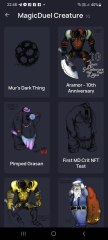
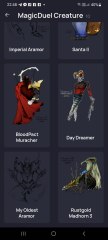
  14. Over the past little while I've been experimenting with creating 3D models inspired by MagicDuel's creatures, characters, and artwork. The results have been encouraging, and I'd like to take the idea much further. My goal is to eventually recreate every creature, character, item, and landmark in MagicDuel as faithful 3D models. This isn't about redesigning the game or replacing the original artwork. It's about preserving and celebrating it in another medium. Every model will aim to stay as true as possible to the original designs while filling in only the details necessary to create a complete three-dimensional version. Some possible uses include: High-resolution renders of creatures and characters. 3D-printable miniatures for collectors. Animated turntables and showcases. Virtual galleries of the realm. Community artwork and promotional material. A complete 3D archive of MagicDuel's visual history. These are nearing completion: I'd like this to be a community-driven project rather than a personal one. I'm asking for the community's help in deciding what should be modeled next. If there's a creature, character, item, or landmark you've always wanted to see in 3D, post your suggestion below. The most requested or most interesting ideas will be given priority. If you have old concept art, screenshots, lore references, or other resources that could help improve the accuracy of a model, I'd love to see those as well. The more references available, the more faithful the final result can be. Current priorities include: Remaining creatures. Player avatars and iconic characters. Important artifacts and items. Landmarks from every land. Structures, monuments, and environmental assets. My philosophy is simple: accuracy first. If a detail isn't visible in the original art, I'd rather work with the community to interpret it than invent something that doesn't fit the world. My hope is that, over time, we can create a complete 3D collection of the MagicDuel realm, one model at a time. So, what should I model next? Let me know below.
  15. Started off nice and neat. Ended up under estimating dill parsley and peppermints required space lol
  16. I assume this quest is still going! :) I also assume that the same medium I used for the Build a Drach quest will work here :) This is what I envision the Hellhound to look like. I took a bit of inspiration from Ghostbusters, and added a few feline characteristics.
  17. I'd like to put myself forward to lead the revival of the Crafters Guild. Crafting has always been one of the systems that gives MagicDuel depth. With the Evolution Shop making more tools and opportunities available, I think it's the perfect time to rebuild a guild dedicated to experimentation, knowledge sharing, and helping players discover what crafting can really do. My GoalsCreate a welcoming place for both new and experienced crafters. Document crafting mechanics, discoveries, and best practices. Organize crafting events, challenges, and collaborative projects. Help members obtain the materials and knowledge they need to progress. Encourage experimentation instead of keeping information hidden. Work alongside other guilds to strengthen the realm as a whole. Why I Believe I'd Make a Good Guild LeaderActive and committed. I'm consistently involved in the game and willing to put in the time needed to keep the guild moving forward. Community-focused. I enjoy helping other players learn and succeed rather than competing with them. Organized. I like creating guides, documenting information, and building systems that others can use. Patient. Crafting often requires trial and error, and I'm happy to help others through that process. Collaborative. I believe the best discoveries happen when people work together instead of in isolation. Long-term mindset. My goal isn't to build a guild that lasts a few weeks, it's to create a lasting home for everyone interested in crafting. Open to feedback. Leadership should adapt to the needs of its members, and I'm willing to listen and improve. The Crafters Guild shouldn't just be a title, it should become a place where players come to learn, experiment, and create. Whether you're forging your first item or pushing the limits of what the Forge can produce, there should be a place for you here. If given the opportunity, I'll work to make the Crafters Guild an active, useful, and respected part of the realm once again.
  18. Item 1: Anni creature 2022. Price: 75 plushies
  19. Item 12 – Tainted Angien - 85 plushies
  20. Wow, I wasn't expecting the Aramor to win! Let alone with over 50% of the vote. Ill have some progress pictures later this week, and hopefully the file ready by the end of the month if I get some time over the next couple weeks.
  21. Hey guys! I thought it would being nice to give the community some input on the next 3d model I make! Unfortunately the Angien is already chosen for my winter break! If you don't see your critter, feel free to post it and Ill add it.
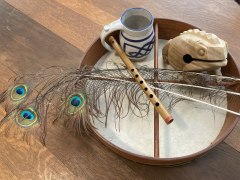
  22. I would make a basic dehumidifier out of a bowl and something with moisture absorbing properties like rock salt. I'd get a bunch of Grassan/Trees(ents are good at breaking castles so why not rock salt lol) to mine for rock salt. Best place in MD seems to be Necrovion where there is the most arid environment ( the most likely place to find rock salt) A basic container, and rock salt is all that is needed.
  23. Also if I might add, Windy. Hope she is doing well.
  24. I'd love to bring up Ravenstrider. He was the artist that drew my avatar, and a few others.

Account

Navigation

Search

Search

Configure browser push notifications

Chrome (Android)
  1. Tap the lock icon next to the address bar.
  2. Tap Permissions → Notifications.
  3. Adjust your preference.
Chrome (Desktop)
  1. Click the padlock icon in the address bar.
  2. Select Site settings.
  3. Find Notifications and adjust your preference.